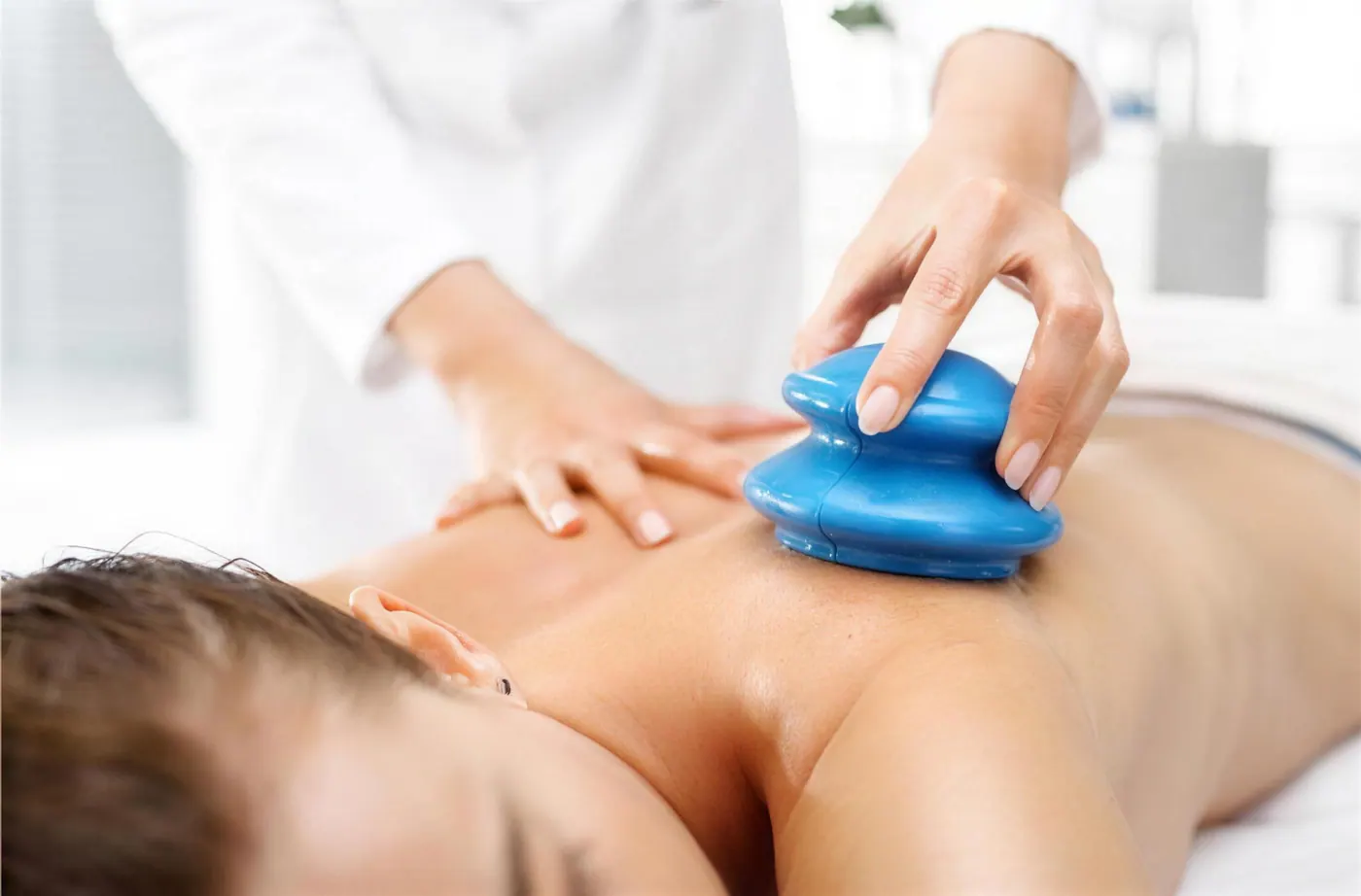
Julia offers two styles of cupping, moving and static, and uses whichever suits you and the area being treated.
Moving cupping
Moving cupping begins with a light lubricant so a soft silicone cup can attach and glide over the skin. The cup is moved up and down, side to side and in circles, stretching the tissue beneath and working through adhesions in the superficial and deeper layers of fascia.
Different sized cups follow the contours of your body. The silicone moulds around bones and uneven surfaces, so it works on smaller areas like knees, elbows, neck and ankles as well as larger areas like the back.
Static cupping
In static cupping, a cup is placed on an area and stays in position rather than moving. The gentle suction lifts the tissue beneath it, which can ease tight muscles and increase blood flow to the area.
Why it's used
Lifting and stretching the tissue under the cup increases blood flow and lymphatic drainage around the area, and supports repair where adhesions or scar tissue have been loosened. At Active Balance Healing, cupping is offered as a complementary part of an osteopathic treatment rather than on its own.
Cupping can leave temporary marks on the skin. Julia will talk it through with you first.
Everyone responds differently. Manual osteopaths don't diagnose conditions or prescribe medication; see the frequently asked questions.
Contact the clinic